When Does an Excavator Undercarriage Need Replacing?
The undercarriage can be a big share of what a tracked machine costs to run. Measure it and you can plan the spend instead of reacting to a breakdown.
On a tracked excavator or dozer, the undercarriage wears out the whole time the machine moves. It's also one of the most expensive repairs the machine will need. The goal isn't to make it last forever. It's to know where it's at, so you replace parts on your schedule, not in the middle of a job.
Signs it's getting close
You can spot some of these on a walk-around:
- Sprocket teeth worn to a point or hooked instead of a rounded profile.
- A "snaky" track chain that doesn't sit straight, which points to worn pins and bushings.
- Track sag you keep adjusting out, because the chain has stretched.
- Rollers that leak oil, have flat spots or don't turn.
- Worn idler treads or flanges, or wear on only one side of the links (an alignment problem).
- Short grousers on the shoes, and cracked or bent shoes.
- Cracked links, missing or loose shoe bolts, or the track coming off more than once.
On rubber-track machines (compact track loaders, mini excavators), look for cracks, exposed steel cords, rounded drive lugs or sprocket teeth, and clicking or popping noises.
Why measuring beats guessing
Each part of an undercarriage has a wear limit set by the manufacturer for that model. "It looks worn" doesn't tell you whether you have a season left or a month. Measuring does.
An undercarriage inspection measures each part (link pitch, link height, bushings, shoes, rollers, idlers and sprockets) on both sides. The readings are compared to the published limits for that machine. You get a written report showing how worn each part is, what needs doing now, and what can wait.
Then you can budget for it. Often only some parts are worn out, so you're not paying to replace the whole thing.
How often to check
Komatsu recommends an undercarriage inspection at least every 6 months, and more often on high-hour machines or hard ground. That's a sensible rule for any make. Rock, sand and abrasive ground wear an undercarriage much faster than soft dirt.
How to make it last longer
The two cheapest things you can do:
- Keep it clean. Packed mud and rock add load and wear. Clean out the tracks at the end of the day, especially in winter when packed mud can freeze.
- Keep the tension right. Too tight wears pins, bushings, sprockets and idlers faster. Too loose and the track can come off. Check it against the operator's manual for the ground you're working on.
Also limit high-speed travel and reverse travel, avoid constant turning in one direction, and work up and down slopes rather than across them where you can.
When it's time
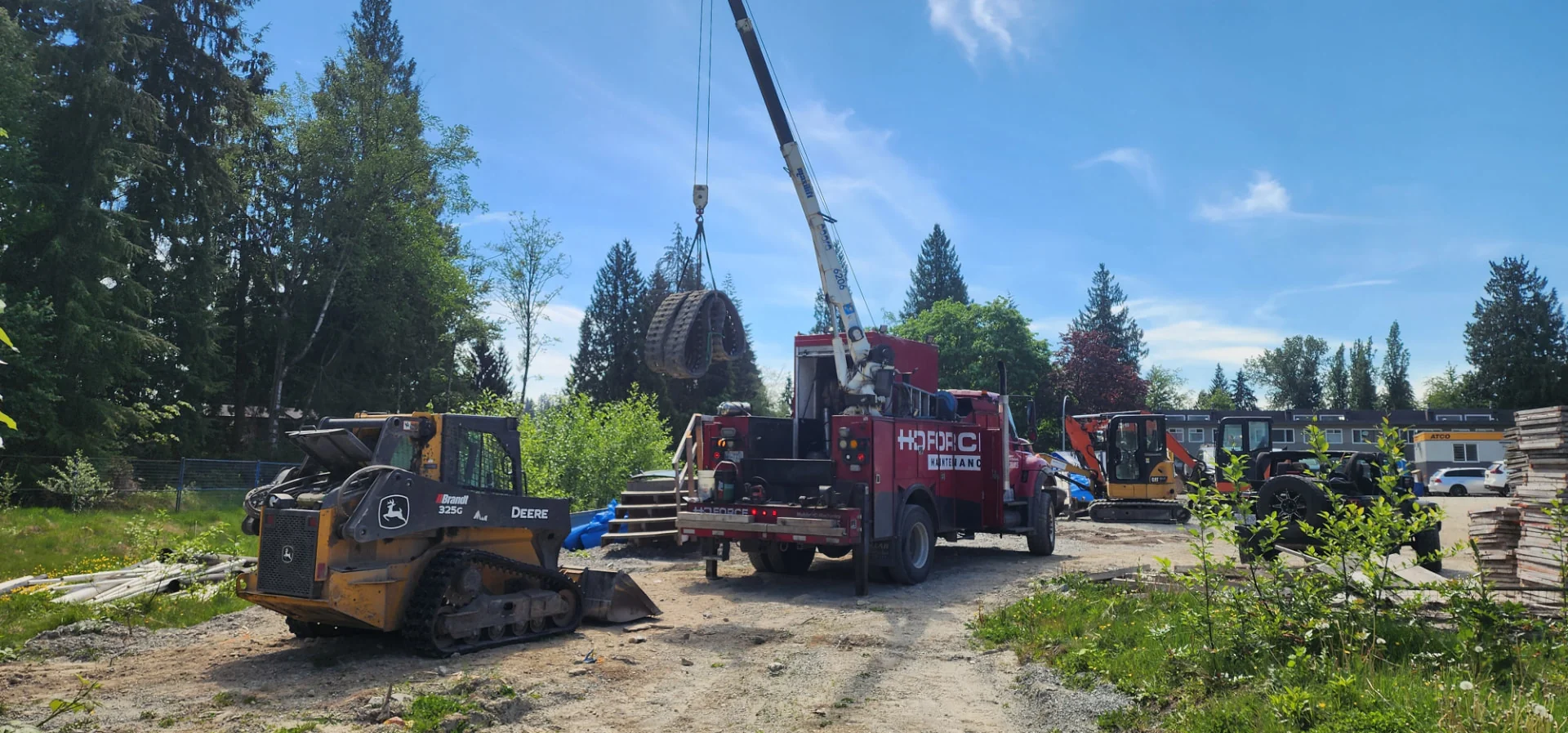
We do undercarriage work on site, wherever the machine sits. That includes putting a thrown track back on, replacing links, rollers, idlers and sprockets, adjusting tension, and replacing a full undercarriage when it's needed.